
Schools and Family Life in Negros: What Long-Stay Families Consider
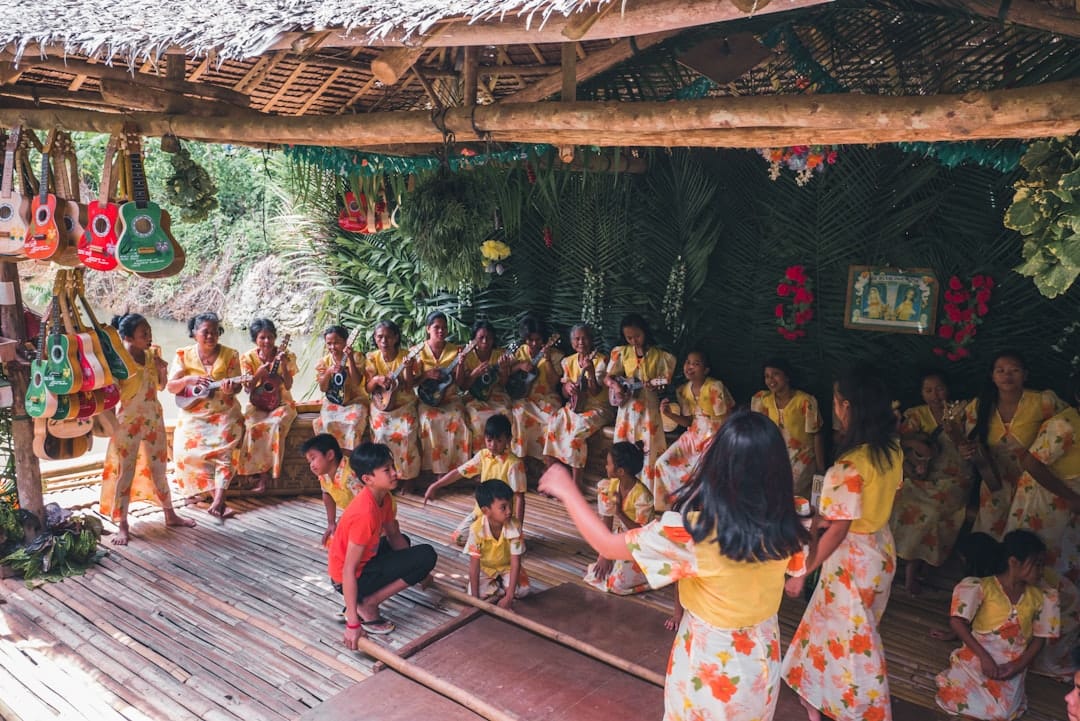
Family life on Negros Island is not organised around flexibility, individual preference, or constant choice.
It is organised around routine, hierarchy, and shared obligation.
Understanding that difference removes much of the confusion families experience when they spend extended time here — and explains why daily life can feel both welcoming and firmly structured at the same time.
This guide is not about choosing schools.
It’s about how family life and education actually work.
What Family Life Means on Negros Island
On Negros, family life is not a lifestyle choice or a private arrangement.
It is a social system.
Children are embedded in extended families, neighbourhoods, churches, and schools that expect continuity and participation. Daily life is shaped less by individual schedules and more by shared rhythms.
Family routines here assume:
- regular repetition
- predictable attendance
- respect for authority
- visible participation
This affects how schooling, childcare, and daily movement function — especially for families staying longer than a brief visit.
How Schools Fit Into Daily Life
Schools on Negros are not isolated institutions.
They are anchors of routine.
In towns such as Bacolod, Dumaguete, Silay, or San Carlos, school days structure:
- morning traffic
- food preparation
- household timing
- neighbourhood noise
Drop-off and pick-up are not just logistics; they are part of daily flow. Streets slow down, vendors appear, and routines align around school hours.
Education here fits into the day — the day does not bend around education.
Routine Over Flexibility
One of the biggest adjustments for families is the emphasis on routine over personal flexibility.
School life tends to prioritise:
- fixed schedules
- uniform expectations
- attendance consistency
- collective pacing
This is not about rigidity for its own sake. It reflects a broader cultural preference for stability and predictability, especially for children.
Requests for frequent adjustment or exception are uncommon and often misunderstood. The system is designed to include families who adapt to it, not to reshape itself around individuals.
The Role of Authority and Structure
Schools and family life on Negros operate within clear hierarchies.
Teachers, administrators, elders, and parents each have defined roles. These roles are respected publicly, even when questioned privately.
Children are expected to:
- follow instructions
- respect seniority
- participate quietly
- represent their family well
This structure carries beyond school grounds into neighbourhoods, churches, and public spaces.
For visiting families, this can feel formal at first. Over time, it often feels clarifying.
Location and School Rhythm
As with many aspects of life on Negros, location shapes experience.
Families living closer to town centres or established neighbourhoods often find daily routines easier to read. In places near central areas of Dumaguete or older districts of Bacolod, school-related movement is visible and predictable.
In more isolated or edge-of-town areas, school life can feel more detached, requiring greater planning and adjustment.
A “good location” for families is rarely about quiet or space.
It’s about being within the rhythm of daily life.
Family Expectations Beyond the Classroom
School is only one part of family life.
Children are often expected to participate in:
- household responsibilities
- family gatherings
- religious or community events
- shared meals
These expectations are not scheduled individually. They arise naturally and regularly.
Families staying longer often notice that children are rarely treated as separate from adult life. They are present, observed, and gradually included — but always within boundaries.
Social Distance and Belonging
Families are generally welcomed politely and with interest.
Belonging, however, develops slowly.
Presence does not immediately lead to:
- deep friendships
- informal inclusion
- shared decision-making
Children may adapt faster than adults, but even then, social distance remains until familiarity is built over time.
This distance is not exclusion. It is how communities preserve continuity while accommodating change.
Why Comparison Causes Friction
Families sometimes compare schooling or family life on Negros to systems elsewhere. This usually leads to frustration.
The local system was not designed for:
- constant choice
- personalised pathways
- rapid adjustment
It was designed for shared participation.
When families stop measuring differences and start observing patterns, daily life becomes easier to navigate — even if it remains unfamiliar.
What Long-Stay Families Often Notice
Over time, families tend to notice:
- days feel structured but not rushed
- children settle into repetition
- routines replace negotiation
- expectations become clearer
Nothing dramatic changes.
Life simply becomes legible.
Understanding Family Life Without Trying to Optimise It
There is no need to “get it right.”
Families do not need to fully integrate, adopt practices, or seek approval. Staying local does not require closeness — only respect for structure.
Accepting boundaries, routines, and distance allows family life to function without tension.
Related Guides
Final Note
Family life and schooling on Negros Island are not designed to adapt quickly to new arrivals.
They are designed to continue steadily.
For families willing to observe rather than reshape, that steadiness often becomes the most grounding part of the experience.
Not because it offers access —
but because it makes expectations clear.