
Things to Do in Negros Oriental: Places, Access, and Tips
Negros Oriental organises itself around Dumaguete, and nearly everything below sits within about ninety minutes of the city in one of three directions: south along the coast, west into the hills, or north along the Tañon Strait. One direction per day is the honest rule. Here’s what’s in each direction and how access actually works.
South: the Dauin coast and Apo Island
Dauin Marine Sanctuaries
A string of protected reef zones directly off the beach in barangays like Masaplod Norte, Masaplod Sur, and Poblacion. This is world-class muck diving, famous for the small strange creatures living in the dark sand rather than big reef scenery.
Location: Dauin, 30–40 minutes south of Dumaguete on the coast road.
Access: Any Ceres bus or jeepney heading south stops at Dauin; snorkelling is straight off the beach in sanctuary zones for a small barangay fee, dive shops line the coast road.
Tip: Each sanctuary charges its own fee and has its own caretaker, so bring small cash and pay at the beach, not online.
Tabo-an sa Malatapay
A weekly market in Zamboanguita where livestock, produce, and fish arrive in the morning and lechon and grilled fish are eaten at long communal tables by midday. The rest of the week it’s a quiet shed by the sea.
Location: Malatapay, Zamboanguita, about 45 minutes south of Dumaguete.
Access: Same southbound buses, ask for Malatapay; the market runs one morning a week, so confirm the day locally before going.
Tip: Go hungry and go before noon. The market and the Apo Island boats share the same beach, so this pairs naturally with the island.
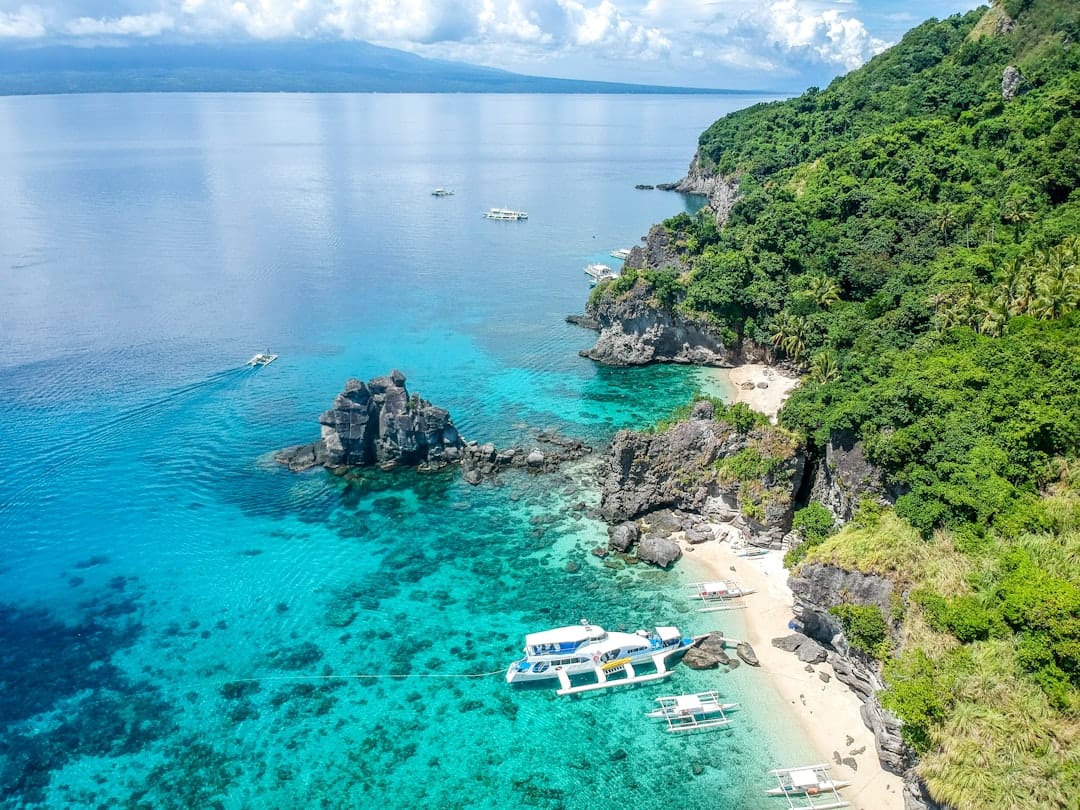
Apo Island
A small volcanic island ringed by one of the oldest community-managed marine sanctuaries in the country. Turtles graze the seagrass in the shallows, and seeing several in one swim is normal, not luck.
Location: Offshore from Malatapay; the boat crossing takes about 30–40 minutes.
Access: Public and chartered outriggers leave from the beach at Malatapay in the morning; day trips are standard, or stay overnight at one of the island’s simple guesthouses like Apo Island Beach Resort.
Tip: Boats stop running in rough weather with little notice, so don’t schedule Apo the day before a flight. Overnighting means having the island to yourself after the day boats leave.
Baslay Hot Spring
Volcanic hot pools in the hills above Dauin, run by the barangay, with a viewpoint over the coast on the way up.
Location: Barangay Baslay, inland from the Dauin coast road.
Access: Habal-habal or tricycle from Dauin proper; the last stretch is steep.
Tip: Late afternoon is the local hour, warm water as the air cools.
West: Valencia and the highlands
Pulangbato Falls and Red Rock Hot Springs
A waterfall running over red rock in the Ocoy Valley, with sulfur vents steaming beside the road and hot spring pools nearby.
Location: Above Valencia town, 20–30 minutes from Dumaguete.
Access: Tricycle or habal-habal from Valencia plaza; the road is paved most of the way.
Tip: The falls and the hot springs are separate stops with separate fees, close enough to do together.
Casaroro Falls
The tall thin one, a single drop into a deep ravine, reached by a long concrete stair. The classic Valencia waterfall.
Location: Valencia uplands, past Tierra Alta.
Access: Habal-habal to the access area, then the stairs down; the path takes damage in typhoons and closes for repairs.
Tip: Ask in Valencia whether it’s currently open before riding up. Mornings beat the midday heat on the climb back out.
Balinsasayao Twin Lakes Natural Park
Two crater lakes in dense forest, managed by the DENR, with paddle boats, a small restaurant, and a viewing deck between the lakes. The quietest place within an hour of the city.
Location: In the mountains behind Sibulan, about an hour from Dumaguete, with a long winding access road off the north highway.
Access: Habal-habal from the highway junction at San Jose is the usual way; private car or motorbike works, the road is steep but paved.
Tip: Go early. Clouds tend to close over the lakes by early afternoon, and the birdlife is a morning thing.
Mount Talinis
The highest peak of the Cuernos de Negros and the serious hike on this side of the island, forest trails, crater lakes, and a summit usually done as an overnight.
Location: Rising behind Valencia; trailheads at Apolong and Bediao.
Access: Registration and a local guide are required, arranged through the Valencia LGU.
Tip: This is a genuine mountain, not a viewpoint walk. Day trips only make sense to the lower lakes.
North: Bais and the strait
Dolphin watching and the Manjuyod Sandbar
Boats run out of Bais Bay most mornings to meet dolphin pods in the Tañon Strait, then continue to a long white sandbar off Manjuyod that surfaces at low tide.
Location: Bais City, about 45 minutes north of Dumaguete.
Access: Boats are booked through the Bais tourism office or pension houses in town; trips leave early morning.
Tip: Check the tide chart before booking. The sandbar underwater is just a boat ride; the sandbar exposed is the point.
Mabinay Caves
Karst country in the island’s interior with hundreds of caves, of which Crystal and Panligawan are the guided, accessible ones.
Location: Mabinay, about 1.5–2 hours inland from Bais on the trans-island highway.
Access: Ceres buses on the Dumaguete–Bacolod southern route pass through Mabinay town; guides are arranged at the municipal tourism office.
Tip: Combine with the drive across the island rather than as an out-and-back, the karst landscape along the road is half the reason to come.
Lake Balanan
A quiet lake folded into the hills behind Siaton, with cottages, kayaks, and almost nobody on a weekday.
Location: Inland from Siaton, southwest of Dumaguete, about 1.5 hours total.
Access: Bus or bike to Siaton, then habal-habal up the valley road.
Tip: Weekdays are near-empty; weekends bring local family groups, which is its own kind of atmosphere.
Dumaguete itself
The city is the base rather than the attraction: Rizal Boulevard in the evening, the public market in the morning, tempura and balut stalls on the seawall after dark, and Silliman University’s campus and anthropology museum in between. Every trip above starts and ends here, which is the argument for staying somewhere near the boulevard and treating the province as a wheel around it.