
Negros Island Food Guide: What to Eat and Where
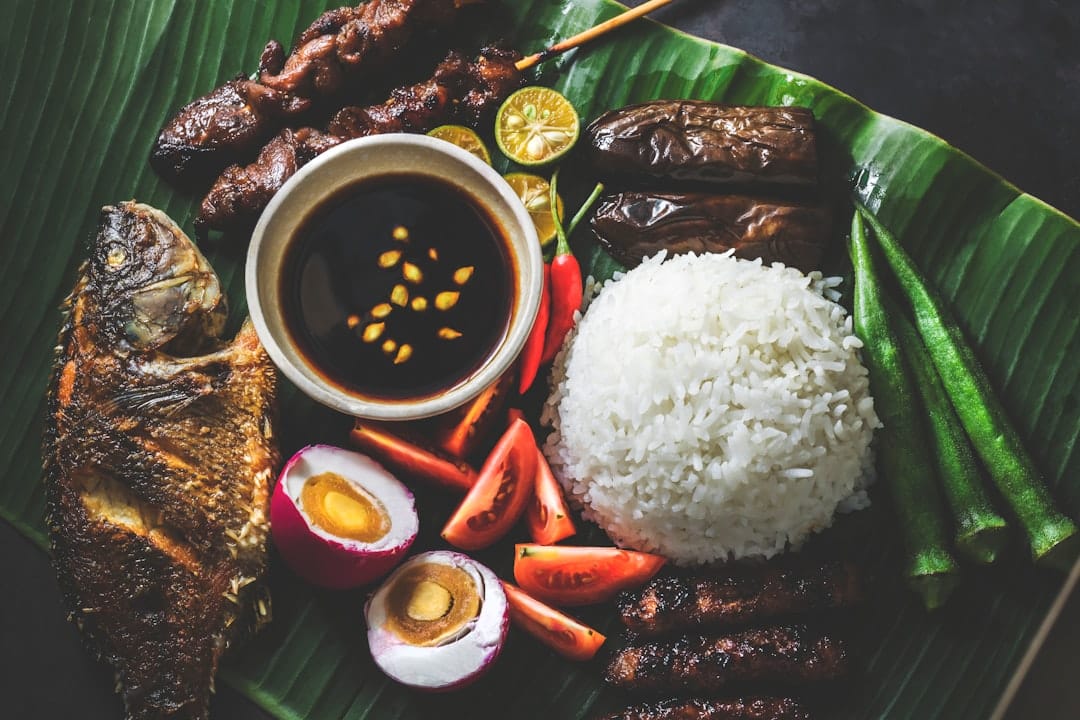
Negros feeds itself differently on its two sides, but the whole island eats from the same base: sugar country, fishing coasts, upland farms, and public markets in every town connecting them. First what to eat, then where it lives, city by city.
What to eat
Chicken inasal
The dish Bacolod gave the Philippines: chicken marinated in calamansi, lemongrass, and annatto, grilled over coals, eaten with the hands over rice with the orange chicken oil poured on top. Order paa (leg) or pecho (breast); the correct utensils are your fingers and the garlic-vinegar dip.
Kansi
The Ilonggo cross between bulalo and sinigang: beef shank and marrow soured with batwan, a fruit that barely exists outside Western Visayas. The batwan sourness is the test of a real one.
Sweets from sugar country
Napoleones (custard puff pastry) and piaya (flat muscovado-filled bread) on the Bacolod side; sans rival and silvanas, cashew-meringue-butter constructions, as the Dumaguete tradition. Silay heritage area for traditional Philippine sweets and pastries All of them travel, which is why they’re the standard pasalubong.
Budbud and sikwate
The Oriental morning ritual: sticky rice rolls with thick tablea hot chocolate, eaten at market painitan stalls from daybreak. The Cebuano-side answer to a sugar-belt breakfast.
Muscovado and tablea
The old sugar economy survives as product: unrefined muscovado still made in the foothills around Canlaon, Kabankalan, La Castellana, and Manapla, moving through fair-trade channels like Alter Trade; tablea from backyard cacao in the Valencia and Dauin uplands and the highland farms of Don Salvador Benedicto. Markets sell both, muscovado in plain blocks, tablea in stacked discs.
Fresh catch and daing
Fish landed at Cadiz and Sagay in the north, Bais and Dauin in the southeast, Sipalay in the southwest, cooked at beach grills the same day. Drying racks line the coast roads in Cauayan, Escalante, and Tanjay, and that dried fish lands on breakfast plates island-wide.
Carinderia food
Turo-turo, point at what you want: pots of adobo, laswa (Ilonggo vegetable soup), paksiw, rice. How the island actually eats lunch, at prices that make cooking for one irrational.
Where to eat, city by city
Bacolod
The island’s food capital. Manokan Country, the row of inasal grill houses beside SM City, is where the city’s signature dish lives in its original form. Chicken House on Lacson Street is the long-running restaurant version, and the Lacson corridor as a whole is the city’s dining strip, street food to sit-down, running through Mandalagan and Bata. Bacolod Central Market and Libertad Market cover the palengke layer, and the Negros Farmers’ Weekend Market (Saturday and Sunday mornings, 7am to 2pm) gathers the island’s small producers, organic growers, and muscovado and tablea makers in one place.
Silay
Twenty minutes north of Bacolod, the heritage city eats in its ancestral houses: the heritage district clusters traditional Negrense food around the old streets near Balay Negrense, and El Ideal, the century-old bakery on the main road, is the reference point for fresh lumpia and guapple pie. Silay Public Market supplies the everyday layer and the kakanin.
Dumaguete
The Oriental side’s food city, and a compact one. Aboy’s is the grilled seafood and Filipino-food institution; Gabby’s Bistro the long-running family restaurant; Sans Rival Bistro the home of the dessert the city is known for; Cafe 1925 the heritage-style café; and Adamo and Buglas Isla Cafe the newer local-ingredient kitchens working with Negros produce. The boulevard food stalls take over after dark, tempura, grilled squid, balut, and the painitan stalls at the Real Street public market do budbud and sikwate from before sunrise. Native coffee stalls around the market pour barako-style local beans.
Valencia
The hill town above Dumaguete eats what its uplands grow: the market area on Larena Street trades in mountain vegetables, fruit, and the cacao that becomes tablea. Cooler air, market lunches, and the produce arriving from farms you can see from the road.
Zamboanguita and the south coast
Tabo-an sa Malatapay, Wednesday from 6am, is the island’s great traditional market morning: produce, livestock, woven goods, and lechon eaten at long communal tables before noon. The Dauin coast between here and Dumaguete adds roadside vegetable stalls and organic farm culture around Masaplod Norte.
Sipalay
The southwest beach town connects catch to grill with nothing in between: the seafood grill area near the beach cooks what the fishing grounds delivered, and the local food area in town covers the everyday eateries.
Kabankalan and San Carlos
The working cities eat at their markets: Kabankalan’s eatery zone around the Tan Lorenzo Street market is the carinderia form at full scale for the south, and San Carlos pairs its public market with the port area, where seafood supply and market trade meet on the northern coast.
How the two sides differ
Occidental eats Ilonggo: inasal, kansi, batwan-soured everything, sugar-belt sweets. Oriental eats closer to Cebuano: more grilled fish, budbud with sikwate at morning markets, silvanas culture. Crossing the mountains changes the menu as completely as it changes the language. And everywhere, the market peaks early: by 9am the best fish is gone, by noon the kakanin is.